We Have Goodness All Around Us
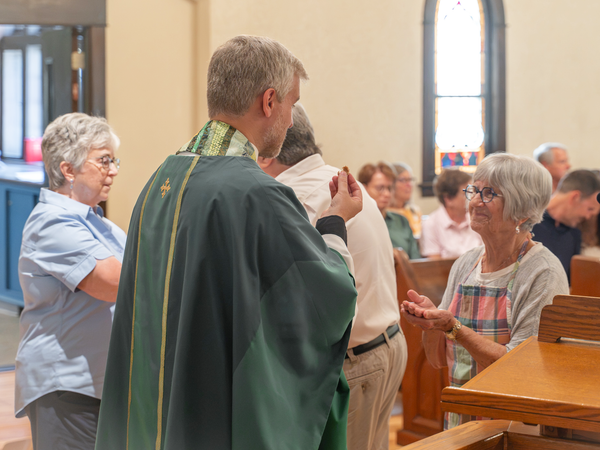
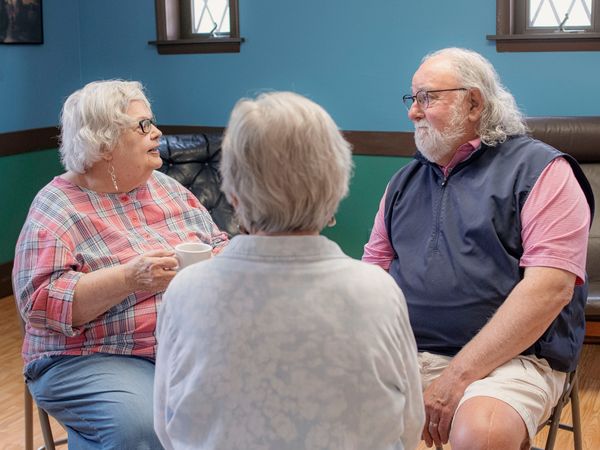
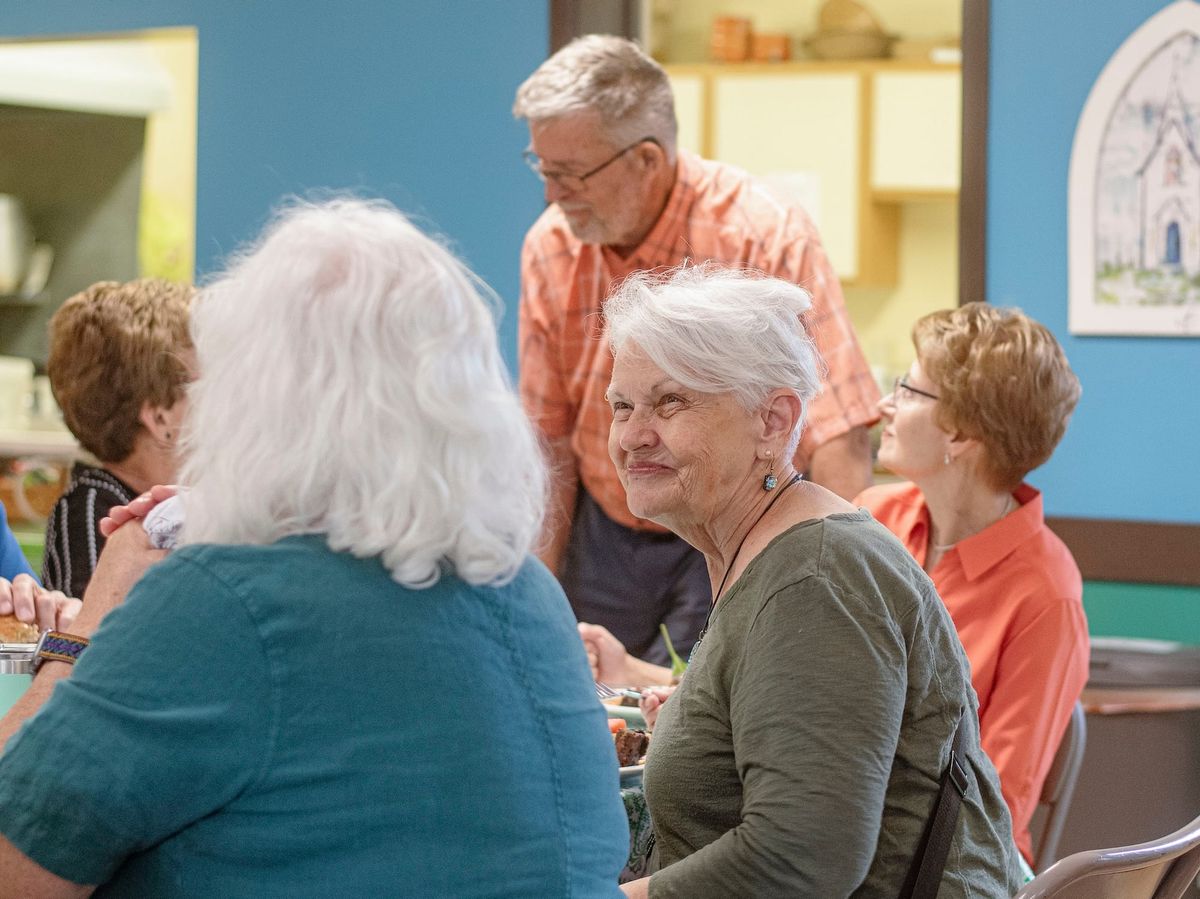
It is so very good to be in community, where the life of Jesus is “caught and not just taught,” where we hear and see the Word, then go live in love.
The Third Sunday of Easter, Year A
Sermon for April 19, 2026
My friends, I speak to you today in the name of one God, Father, Son, and Holy Spirit. Amen. Please be seated.
Happy Easter, Church of the Epiphany. It’s good to be back with you on a Sunday morning. Last weekend, I was at St. David’s Episcopal Church in Lansing with my dad and my oldest daughter, on our way back from a Saturday of sports in Detroit. We went to St. David’s for a “Professional Development Sunday,” so I could learn from another church, see what’s going well for them, what we might implement here. St. David’s has a growing children’s ministry and a youth group, and it was a really great visit, actually. But no matter how great last Sunday was, it is good to be home. Those of you lucky enough to travel each winter know what I’m talking about; it is good to be here, together.
I share that, in part, so you’d understand context for this: on our way home last Sunday, our trio of Wakefields stopped at Red Robin for lunch. Bottomless sweet potato fries are among Lily’s most favorite things, and they’re available on the kids’ menu too. Kids’ menus, if you haven’t been given one recently, they come with little games and word searches, and Red Robin’s kids’ menu comes with a few ice breaker questions. One of them was this, maybe you can discuss it at brunch or on your drive home: “If you had a time machine, would you go to the past or to the future?” If you had a time machine, would you go to the past or to the future?
This question kept the three of us talking about possibilities throughout our entire lunch, through Lily’s burger and two baskets of fries. While visiting the future is appealing, it’s also a little intimidating, so all three of us landed on visiting the past. As a history major in college, my answer was definitely the past: I want to see the dinosaurs, the pyramids being built, the painting of the Sistine Chapel, the Revolutionary War. And as a priest, of course, I said I’d want to meet Abraham and Isaac, King David, Ruth and Naomi; I’d want to be at the Nativity, hear the Sermon on the Mount; I’d want to witness the events of the first Holy Week, the Last Supper, the Crucifixion, and the Resurrection. My dad’s first response surprised me. Maybe he had read ahead in the lectionary or something, but his first answer, the first place he said he’d go, was here, to this story in the Gospel of Luke, to Jesus appearing to two disciples on the Road to Emmaus.
Now I don’t share that to make you think my dad is particularly pious, though I like him. I think it was just a great way to come to this text, to the reminder that though we read it only once every three years in our tradition, Luke 24:13-35 really, really resonates with so many Christians. Here we find Jesus, unrecognized, walking with two of his followers along the road. One commentator, who also called this his favorite passage in all of scripture, calls this the “Seven Mile Bible Study.” Jesus appears, hears their sadness, and then “interprets to them the things about himself in all the scriptures.” For those, like Thomas, who needed proof in last Sunday’s reading, here we have Jesus himself leading a scriptural study group during a seven-mile walk to the village where they were going, letting even those “slow of heart to believe” in on the secret that he, Jesus, is the Messiah.
As we read this story in community this week, particularly together with our group on Wednesday morning, I heard other reasons this resonates. There’s anxiety, fear, sadness, frustration, disappointment in these disciples’ lives, and yet Jesus is there with them, God is there with them. The line about women, “moreover some women of our group astounded us,” always draws some laughs… maybe the disciples should’ve listened to the women among them more often? You think? And there is deep connection with walking, walking with Jesus, walking to learn, to work things out. This story is full of goodness.
As your priest, I particularly love the last paragraph, once they get to Emmaus and urge this stranger strongly to stay with them. He takes bread, blesses, and breaks it and gives it to them, familiar language now for anyone used to coming to church on Sunday. There is radical hospitality here; there is willingness to offer it and willingness by God to receive it too. If even Jesus can accept hospitality, we need to learn to do so ourselves. “Then their eyes were opened and they recognized him;” he was “made known to them in the breaking of the bread.” It is through that hospitality, perhaps through our sacraments here, that Christ is made known to us today too. This is just a beautiful, rich narrative.
So where do we land with it today? There is so much here that can speak to us this morning from the Road to Emmaus, from walking with Jesus. I thought at one point this week about asking you to walk in circles around the Nave during this entire sermon; it’d certainly be memorable. But that’s a lot of walking; I did not land there. You’re welcome.
Instead, I want us to consider more deeply that though these two disciples walked with Jesus for hours, they did not recognize him. They were anxious, afraid, sad, frustrated, and disappointed, and they could not see Jesus right there, walking with them on the road.
We know there is a lot of anxiety, fear, sadness, frustration, and disappointment in our nation these days. It has been hard to avoid, even at church. On 60 Minutes last week, a Catholic cardinal said, “Life is political. Political is how we live together and how we face our problems together, (so Christians) cannot be nonpolitical… Political means taking responsibility for our world and its problems, especially how they affect those who are weakest.” And so, we will be political here at this church; belief in Jesus as Messiah, belief in Jesus as our Savior and Lord, as King of Kings, Prince of Peace, this is political.
That stance invites anxiety, fear, sadness, frustration, and disappointment today, just as it did then. It does so in part now because of the way we all interpret Jesus, this Christian tradition; just this week we’ve seen prayers from cabinet members rebuffed by the Pope, for goodness’ sake. We disagree with how others depict Jesus, and they disagree with us.
Since I last preached here, Pastor Dave of First Congregational and I were lucky enough to address a group at Lake Michigan College on the subject of Christian Nationalism. We shared our own personal stories with a room of about 90 people, and then we did our best to answer some questions. Throughout those questions? Anxiety, fear, sadness, frustration, disappointment… maybe a little anger too. One woman pointedly asked, “We’ve heard a lot about this topic, but what do we do about it? I need three specific things we can do when we leave here.” Her frustration was evident. She knows there are problems in this world, and yet thankfully, she still wanted to do something about them.
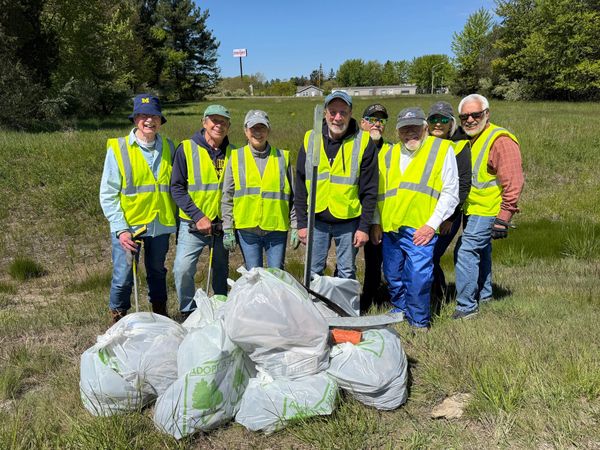
Pastor Dave and I echoed each other in our answers. They were these: First, find a way to be with the poor, the oppressed. Build relationships, volunteer, give, make a difference, be the change you want to see. Second, unplug from your doomscrolling, your opinion-confirming and silo-creating newsletters. Find time each day to pray, to meditate, to rest, to enjoy creation, to not dwell only in your anxiety. And last, but most importantly for me, join a loving community. Pastor Dave and Father John, as you might expect, both recommended a good church, but it didn’t have to be. Find a way to surround yourself with people who love without condition, where you can love and be loved in return.
And that is where we landed because it is truly good to be here this morning. It is good to be in this community, where the life of Jesus and the resurrection itself is “caught and not just taught,” where we hear the word and see the word and then go and live in love, we live differently as a result of all this. It is good to be walking with the embodiment of goodness, with Jesus, together, even when we don’t see him in a world of anxiety, fear, sadness, frustration, disappointment. This Jesus is walking with us now, today, and we are reminded of that every time we gather together in worship, every time we break the bread and he is made known to us.
17th century French friar Brother Lawrence wrote this: “There is not in the world a kind of life more sweet and delightful than that of a continual conversation with God.” Here at Epiphany, we walk our own roads to Emmaus together, we break bread together, our hearts are burning together, and we are invited into that continual conversation with Jesus, a kind of life more sweet and delightful than any other.
There is goodness all around us, friends. May our eyes be open to recognize it, may we live in that goodness and in conversation with that goodness, and may we invite others to do the same.
Amen.