Embracing the Stranger, Celebrating with God
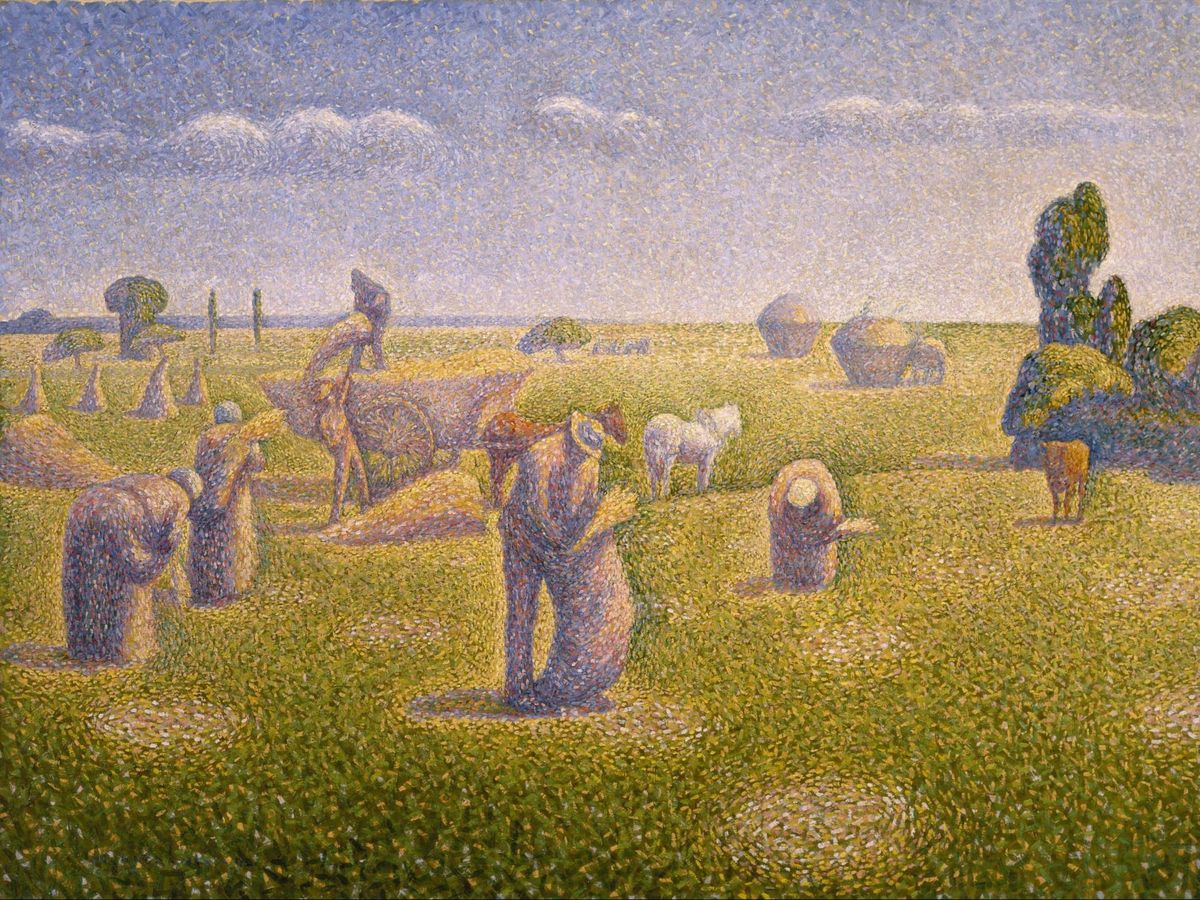
The radical part of our parable this morning is that it is not ours to decide or to reap: it is ours simply to grow, to love, to share with everyone.

The Eighth Sunday after Pentecost, Year A
Sermon for July 19, 2026
My friends, I speak to you today in the name of one God: Father, Son, and Holy Spirit. Amen. Please be seated.
Good morning, Church of the Epiphany. Happy smoky Sunday in South Haven. It’s not nearly as bad as it was earlier in the week; on Thursday and Friday, I could barely breathe while walking our dog, Charlie. It reminded me of the early days of the pandemic, when many of us were afraid to leave our homes. Thankfully, the smoke is passing a bit, but I was reminded while I had a scratchy throat and burning eyes on Friday that we’re all in this together: be it pandemics, wildfires, or lettuce parasites that cause explosive diarrhea. We’re all in this together.
That is certainly a theme for us in this week’s gospel. We’ll get there in a minute. But in several different ways, that theme popped up across our country this week too, across sports, across pop culture. First, sports. Most of you know that I was a sportswriter in a former life: I’m an avid sports fan, with baseball and soccer usually leading the way. Soccer has been a focal point for many around the world this last month, with the World Cup wrapping up this afternoon, and a great third place game yesterday. I was listening to some commentary about the World Cup this last week, from a well-known political guest (who will remain nameless) on the soccer show Men in Blazers, and I heard him say this: “What the United Nations was supposed to do, the World Cup is actually doing… it is a global megaphone, a potential unifier… we have more similarities than differences… when people get together, they recognize they are not that different… This tournament is a great way to be introduced to and appreciate new cultures, teaching the world to sing in harmony.” Later, the guest described the World Cup as an extended family reunion, where people who have scattered to far distances all come together, and in celebrating side by side, they recognize both the beauty of their differences and the strengths of what they have in common. Standing side by side, with both joy and sorrow over a simple game, we realize that we, though we may look or sound different or have different political and cultural beliefs, we are not all that different from each other. A simple game, bridging divides.
We’re all in this together.
Moving on from sports, a new movie came to the theaters this week too, one many have anticipated for quite a while: The Odyssey, as directed by Christopher Nolan. Do we have more movie fans than sports fans here, I think? I wrote down the release date for this one when it first came out, and then I went and saw it opening night here in town. Now this movie just came out on Friday, you’ve had about 48 hours to see it, so I will do my best to avoid spoilers, but you must know, The Odyssey’s source material is about 2,700 years old, so come on, you’ve had time.
Nolan’s modern interpretation with Matt Damon, Anne Hathaway, and Tom Holland, among many others, it puts a heavy emphasis on the idea of Zeus’s Law, the unwritten rule of Greek hospitality that mandates hosts provide food, shelter, and safe passage to all strangers. No exceptions. This religiously-required hospitality is at the core of Nolan’s adaptation: there are those who do not offer it, those who take advantage of it, those who honor it, and those who pervert it, bringing ruin. Now, get ready for a very bold statement: this may be the best movie I’ve seen in my entire life. It is definitely one of my favorites, and so I really want to talk more about it, but I should let it breathe for a bit. Go see it. We’ll talk more later.
But this idea of hospitality being a law of the gods, especially in the way that Nolan essentially equates it with the Golden Rule, this should be very familiar to those in our tradition. I’m told one of Father Michael Ryan’s favorite sayings was “embrace the stranger;” this is an important Christian theme across centuries of tradition. We do have plenty of Bible to back it up: “Love your neighbor as yourself” is, after all, one of the two greatest commandments. Embracing the stranger is core to our identity here at Epiphany too: “Whoever you are and wherever you are on your journey of life and faith, you are welcome here.” In our baptismal covenant as Episcopalians, we also affirm: “Will you seek and serve Christ in all persons?” “We will, with God’s help.” And the Greeks in The Odyssey, they follow Zeus’s law in part because they never know if those strangers are “gods disguised as men.” The writer of the book of Hebrews writes, “Do not neglect to show hospitality to strangers, for by doing so, some have entertained angels without knowing it.” The parallels between the two are clear.
Embrace the stranger. Love your neighbor.
We’ve been presented then, this week, with a worldwide sports tournament that reminds us that we all share more in common than we might think, that we’re all in this together, and we’ve been presented a blockbuster movie that echoes Christian themes, begging us to love one another, to embrace the stranger, and reminding us that neglecting to do so brings only ruin because all of us need hospitality and love for society to function, to survive. Yet, sadly, both of those themes seem to stand in brutally stark contrast to the modern narrative, to the political powers and economic divisions of our world, in contrast to greed and corruption, in contrast to brutality and war.
Love your neighbor. Embrace the stranger. We’re all in this together.
Our gospel today brings home these points, though on the surface, it may not appear to do so. The “Parable of the Weeds,” as it’s often called, follows last week’s “Parable of the Sower,” where we were reminded to spread seeds of joy and love everywhere, recklessly, without concern for where they might fall. Today’s parable, and especially Jesus’s explanation of it, does have more of a warning tone, with some alarming language to twenty-first century ears: “the enemy who sows the weeds is the devil,” “the weeds are collected and burned up with fire,” “the reapers will throw them into the furnace of fire, where there will be weeping and gnashing of teeth.” There’s no denying that there’s an undertone here of us vs. them, wheat vs. weeds, so how do we read this, this morning?
Well, the gospel, this parable in particular, it must be heard and read in context, not cherry-picked for the eternal judgment part. And in truth, it is actually not dissimilar at all from the parable just before it: just as it is not ours to worry about where the seed lands, it is not ours to worry about separating the wheat from the weeds. The truly radical part of this parable this morning is not in the weeping and gnashing of teeth, language familiar to Matthew’s audience, but in the master’s response to his slaves in the first paragraph: “Do not separate the wheat from the weeds, for in gathering the weeds you would uproot the wheat along with them. (You may not be able to tell the difference anyway.) Let both of them grow together until the harvest.”
See, it is instinctual, friends, it is almost fundamental to who we are in modern society, for us ourselves to decide to label each other, then to judge and to try to enforce the consequences of our own judgment. We may read labels this morning of wheat and weeds, but we know these labels today as those who are in and those who are out, those who are welcomed and those who are not, those who are right and those who are wrong. Perhaps we’re more familiar, thanks to our partisan political obsessions, with labels like those who are communist and those who are fascist, or those who are foreign and those who are “true Americans,” or those who are red and those who are blue. We deeply want to turn everything into a team sport, but not as a friendly game played kicking a ball on a field, with handshakes and hugs afterwards, but as the battlefield of our very lives. It’s easier to have teams to cheer for and cheer against, after all.
These labels have consequences of course, and not all labels are inaccurate, but in labeling the other as “the other,” in deciding that one group of people is made up of enemies and not fellow human beings, we find ways to demonize and ostracize each other. As I preached about a few weeks ago, if we all actually loved our enemies, this might not be a problem! But we struggle with that, don’t we? We know who the wheat is (us), we know who the weeds are (them). And we want to do the reaping, we want judgment, we want the “them” punished.
And yet, we’re all in this together, right? We may have lost the humility to admit that we don’t know if we ourselves are wheat or weeds, that that judgment is God’s alone… humility no longer seems to be a virtue in our society. We may be sure of our own opinions, but that does not make them fact. And so the radical part of our parable this morning is that it is not ours to decide or to reap: it is ours simply to grow. Then, we are promised, there will be a day of justice, someday, but thanks be to God, it is not ours to pass that judgment. I know that I have sinned, I’m guessing you have too. We confess this sin together, and we pray for grace and mercy for ourselves as much as we pray for it for each other, for everyone outside these walls this morning. No one is outside the need of God’s radically abundant grace and mercy.
Friends, may it be very good news today that it is not ours to do any reaping, but simply to love, to be wheat, to celebrate our common humanity in a world where joy and laughter are on offer, and then to share those with everyone, especially the foreigner, the stranger. In so doing, we may be entertaining angels, celebrating with our God, without even knowing it.
Amen.