Giving God All That is God’s
When we discard the story as it is often presented to us, we instead see clearly that we are all made in the image of God, we are all worthy of love.

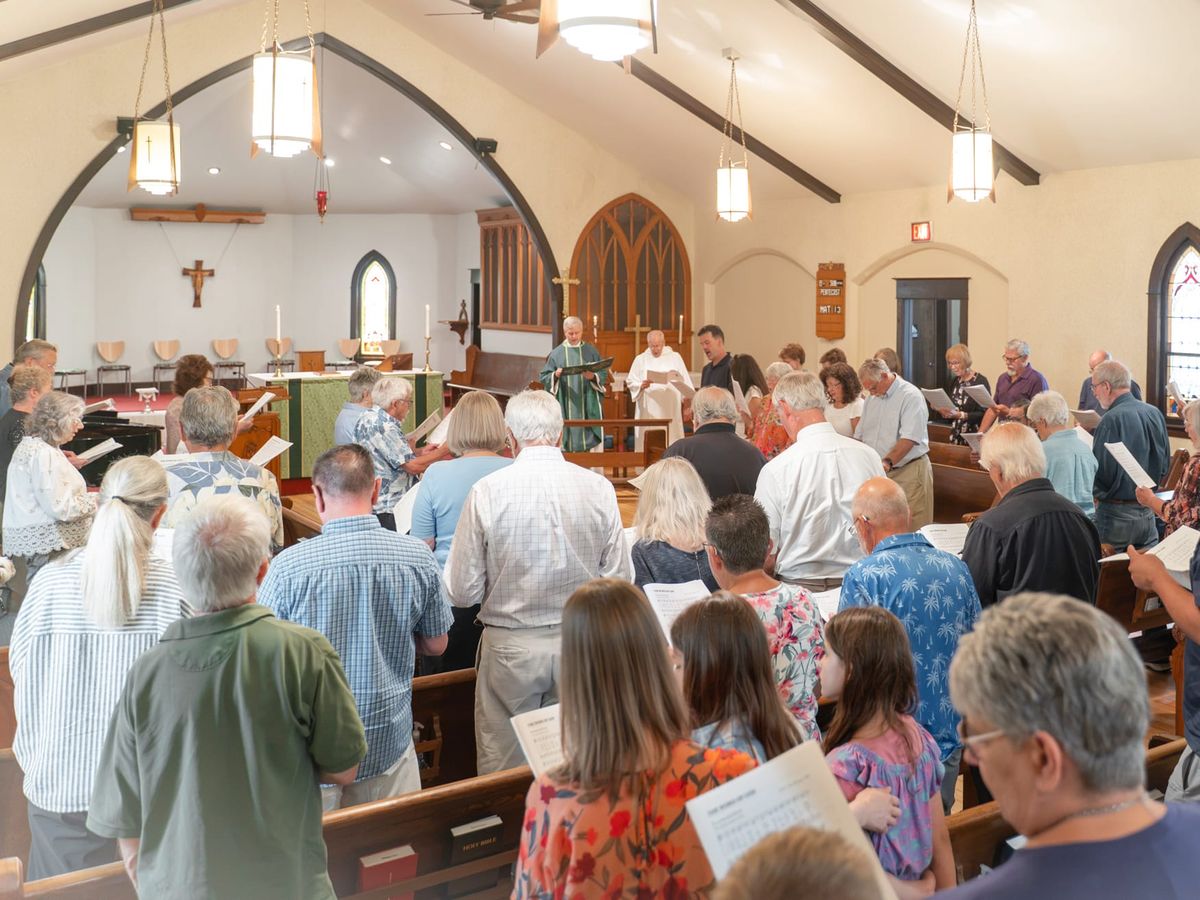
The 21st Sunday after Pentecost, Year A
Sermon for October 18, 2026
My friends, I speak to you today in the name of one God: Father, Son, and Holy Spirit. Amen. Please be seated.
Good morning, Church of the Epiphany. Yesterday was a pretty great day for my little family: Lily placed second at Regionals in Kalamazoo in the 2-mile run, her last day of Cross Country in middle school. Nora and Jane had their last soccer game of the fall season. Nana, Abbey’s mom, visited from Tennessee. And Abbey and I went to our first wedding in a long time, my first as a priest, last night. We left the building only about 15 hours ago. It has been that sort of week for us: full of good things, but very, very full.
In one of our slower moments, Lily was home from school on a half-day and I needed to run in to church, so she asked me for a movie recommendation. If you’ve been here very long, you know this is a big deal for me: I love movies, I often preach referencing them, I’ll do so again today. I’ve watched thousands of movies since college, keeping track on a spreadsheet so that I’d be armed for just this occasion someday, when my teenager would ask me for recommendations, maybe for the first time? I still found myself at a loss, there are too many options, too many genres, too many moods to fit. We landed on Inception, the Christopher Nolan psychological thriller, one of my favorite movies and a 2011 best picture nominee, and it sounds like she liked it. But another that I recommended (and secretly hoped she would skip so that we could watch it together later) was The Matrix, the Oscar-winning action movie about artificial intelligence, about choices, from 1999.
This movie is now 27 years old, so we have left the spoiler window. In it, Keanu Reeves and Carrie Anne-Moss, whose characters are named Neo and Trinity lest you doubt there are religious tie-ins here, these characters encounter a world where computers run the show and humans are used for fuel for the machines. These humans don’t realize they are plugged into a story, a simulation, while they live and breathe and generate energy for machines. And the simulation looks similar to the lives of 1999, full of menial office jobs and small, beige apartments, which of course makes the viewer of the movie question if maybe they too are in a simulation. If you remember, choosing a blue pill or a red pill is a big decision about halfway through the movie: a blue pill to forget all you had learned, a red pill to go deeper, to as Morpheus says, choose to “see how deep the rabbit hole goes.” At my graduate school in Seattle in 2009, 2010, they had little red Hot Tamales candies at the front desk, symbolizing a daily choice of choosing the red pill, to choose to learn “the truth, nothing more.” In the movie, taking the red pill meant that you would see the world as it really was, learn who you really were, and then with that knowledge join in on the resistance against the machines that were telling everyone a story that was not reality.
What does this have to do with the gospel, you may be asking. Happy Sunday, welcome to church, where your preacher likes to talk about movies to a captive audience, apparently. This morning’s gospel, the question about paying taxes put to Jesus on Holy Week, after he has entered Jerusalem on a donkey and continued to shake things up, continued to speak out against the religious and civil powers of the day… this morning’s gospel is a familiar one, I think. “Give to Caesar what is Caesar’s and give to God the things that are God’s.” The Pharisees and the Herodians, those who support Roman rule and enforce the Roman tax system, these men try to trap Jesus in one of the explosive political issues of their day: “Who deserves our allegiance?” Jesus cannot say they should not pay their taxes; he would be branded as a revolutionary, the head of a rebellion, likely arrested on the spot. Nor can he say they should, because many people detested Roman rule. Jews expected Jesus to be a Messiah with a sword, the one who would indeed overthrow the Romans.
And so Jesus, not fooled by their flattery, sensing a trap, Jesus delivers a masterstroke rebuttal, a reframing of the question with an object lesson that amazes them, that puts them to shame. “Who has a coin,” he asks, knowing the people would not forget this example; “whose head is this and whose title?” On the denarius is Caesar’s head, Tiberius Caesar, and the titles, “Chief Priest” and “Son of the Divine Augustus,” essentially “Son of God.” Jesus holds up a coin that clearly shows Roman blasphemy, something they all would have had strong opinions about… and he dismisses it entirely. It's too small a question.
Jesus does not say capitulate, accept the rule of Rome, nor does he say refuse, do not pay their unjust taxes, fight the powers that be. Instead, Jesus rejects their story of reality completely, dismissing the significance of a small silver coin, dismissing their squabbles over power, in light of a much wider, more important truth. “Let Caesar have his coins,” Jesus says, and “give to God what is God’s.” This likely provokes a follow-up question, as it did on Wednesday in our Gather & Grow group… surely someone wanted to ask him, “And what is God’s, Jesus?” Well, we don’t get a follow-up question in Matthew’s account, but we are left to consider it ourselves, 2,000 years later. So let’s do that.
What, really, is God’s? Today, in the Nicene Creed, we’ll profess that we believe in one God, the Father, the Almighty, maker of heaven and earth and all that is, seen and unseen. In our Eucharistic Prayer, I’ll pray for us that it is right and a good and joyful thing, always and everywhere, to give thanks to God, Creator of heaven and earth. If we in the church believe that God is the maker and creator of everything, of heaven and earth and all that is, then we know the answer to the question “What is God’s?” We know what Jesus is saying when he answers, “Give to God the things that are God’s.” We give God everything. Not just our money, not just our work, not just our time, nor our creativity, nor our thought, nor even our breath, not just our love, but everything. Everything belongs to God, and Jesus is calling us to give everything back to God. Coins paid in a first-century tax are wildly insignificant when compared with all that God has created. He showed them the bigger, deeper reality.
We also know that we ourselves are made in the image of God. Contrasting with the coin made with the image of Caesar, we know this morning from the very first pages of our scripture that we, each one of us, we are made in the image of God. We are constantly told who we are by the world around us: we are young, we are old, we are healthy, we are unhealthy, we are married, we are single, we are parents, we are grandparents, we are children. Maybe we are sports fans or athletes, movie-watchers or book-readers, artists or singers or fishermen or knitters, Republicans or Democrats, teachers or priests, we are retired or just getting started or both. We have so many ways to define ourselves... but the core identity that all of us, all of us share is that we are made in the image of God. We bear the image of God.
This, friends, this is the lens by which we must see the world, the underlying truth we claim when we take the red pill from that 1999 movie, the truth we see when we "go down the rabbit hole," "nothing more." When we discard the simulation of life as it is often presented to us – of victories over our enemies, of achievement at the expense of others, of competition and ambition and profit at all costs, of lesser titles than beloved of God – when we refuse to live by that story, when we refuse to play by the game of the Pharisees and the Herodians, to fall into their trap of choosing petty sides and fighting against each other, we instead see clearly that we are all made in the image of God, we are all worthy of love, and therefore we are to be offered back to God, everything we have and are and hope to be.
We can choose to continue to live in the trap, in the simulation: in The Matrix, that’s choosing the blue pill. Many do, even many Christians. It’s easier there, it’s comfortable with clear lines of who’s on whose team, of a ladder to climb, of enemies to vanquish, of toys to acquire, of goals and tasks to be accomplished and done. But if we choose to recognize the truth, and then re-enter the world, joining a resistance not against one another but against the very idea that some are less than, that some are not worthy... then we join with Christ. We join with the Triune God when we declare that we are all made in the image of God, everything is made by God, everything and everyone is worthy of love. This is our story, this is the reality of Jesus.
Friends, this morning, may we throw off the insignificant coins and stories of this world and instead spend all our time learning to love as God loves. May we give to God the things that are God’s… which, of course, is everything. Amen.