Following a Supernatural Vision of Compassion
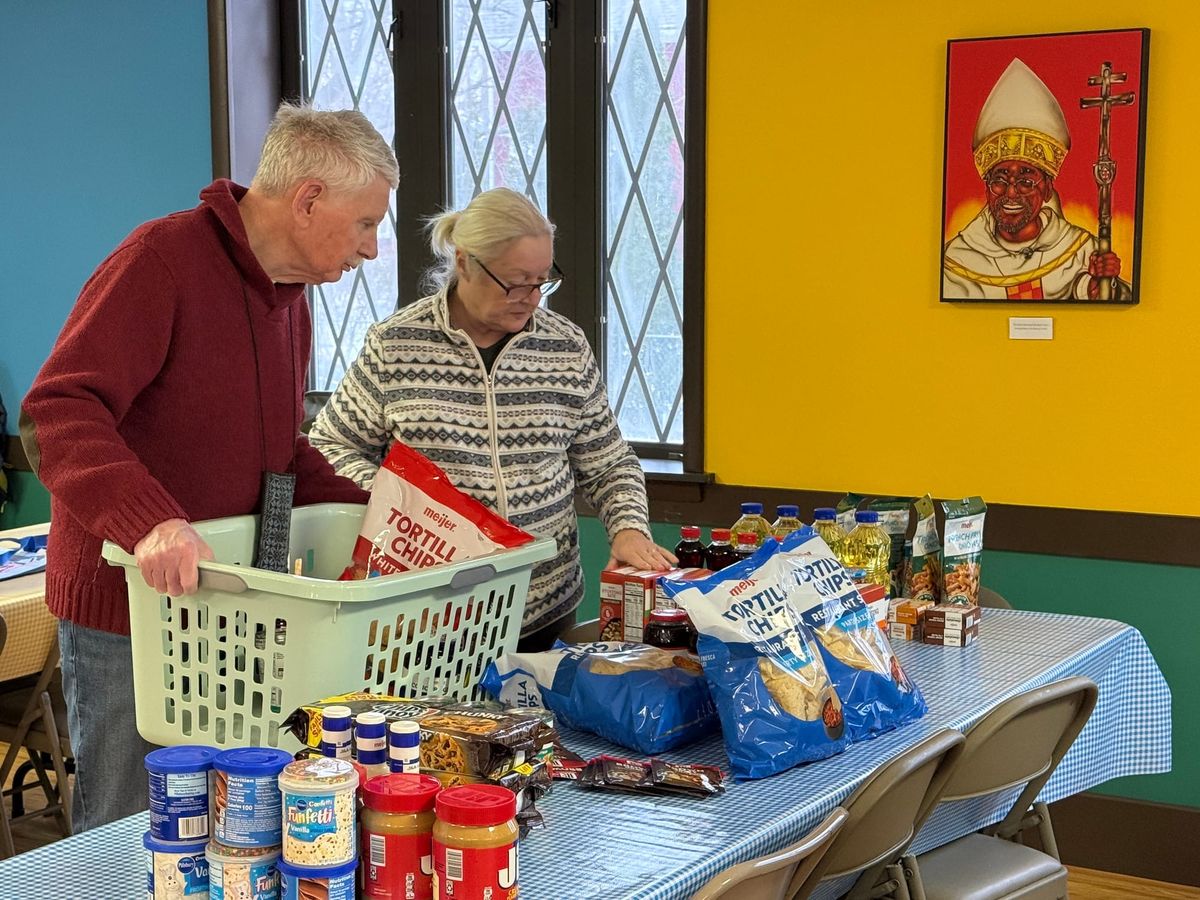
Jesus breaks the foundation of scarcity. He takes the disciples’ food and shares it, and his miracle of abundance inspires everyone to do the same.

The Tenth Sunday after Pentecost, Year A
Sermon for August 2, 2026
My friends, I speak to you today in the name of one God: Father, Son, and Holy Spirit. Amen. Please be seated.
Good morning, Church of the Epiphany. Happy August. Can we believe it’s August already? School starts again soon, kids, it is that time of year. It is also apparently movie season; we’re still in the “blockbuster,” “popcorn movie” release period of summer. Two weeks ago, I preached about The Odyssey, or at least I touched on it… has everyone seen it by now? This weekend, the new Spider-Man movie came out. I wanted to see it, but I was sick this last week and missed out. Maybe you’ll hear a Spider-Man-themed sermon next Sunday. No, you won’t, unless Bob wants to preach it; he’s presiding and preaching and baptizing someone next week, my first Sunday off since April. Our family will likely be here next week, but I guess you’ll have to wait for a superhero sermon a bit longer.
Or will you?
This morning’s gospel is one of the most familiar of all of Jesus’s miracles, this “Feeding of the 5,000.” It is the only miracle recorded in all four gospels. In Matthew’s edition, he notes that we have “5,000 men, besides women and children,” so according to his account, there were likely more than double that number in this “deserted place,” something like 10,000-20,000 people. My only frame of reference for a crowd that large is a sporting event, with tiered seating. I’ve never been to Burning Man or Coachella, but I’m imagining images of that sort of crowd size. This is a lot of people.
You’ll remember from the first few lines of today’s gospel reading that this isn’t exactly what Jesus had in mind. “Jesus withdrew in a boat to a deserted place by himself.” Poor guy. The Son of God, he just wanted some alone time, but… no. There was a real need here, and Jesus, full of compassion, brings his boat in and goes ashore. We know he cured their sick; he likely listened to them, hugged them, sat with them, preached to them the good news of the Kingdom of God. We are led to understand that this was an all-day affair: when it was evening, the disciples reminded their beloved leader and friend (who might be taking this whole ministry thing too seriously, a bit overworked, as it were), that, “Hey, these people, this massive crowd, they need to go eat.” Jesus could have said, “Yes, of course, alright everyone, it’s been a great day, but it’s time to go home.” That would have made sense, it would have been the reasonable move. The concert/festival-sized crowd in the desert needed to go find some food and drink; the main event they’ve all come to see needed his rest, and his disciples, his groupies, they needed their rest too.
But we know that Jesus does not live by or exhibit “common sense.” Common sense is defined in the dictionary as “sound and prudent judgment based on a simple perception of the situation or facts.” Jesus has a little more than simple perception, doesn’t he? Jesus views the world through superhuman eyes, through eyes that see far more than what we can see. I’m not comparing him to Superman, I’m not saying he has x-ray vision or can shoot lasers, but I am claiming this morning that Jesus’s vision, his way of viewing the world, is a superhero kind of vision. It is that dramatically different from our own. His vision is far beyond ours, and it is profoundly inspiring, capable of changing the world.
First though, Jesus refuses their common sense, our common sense, in asking the disciples to simply “give them something to eat.” In an act that mirrors the Last Supper and our own Holy Eucharist 2,000 years later, Jesus takes the loaves and the fish, looked up to heaven, blessed them, broke the bread, and gave them to his disciples.
As a side note: we don’t know where the fish go in Matthew’s account. It came up in discussion here this week that they seem to disappear from the story. We can assume the fish are not “broken” as one would break bread (that’d be gross), but fish do appear throughout the New Testament, in this seaside culture. Several disciples are fishermen; Jesus tells his followers to be fishers of men, of people. Fish is what Jesus eats immediately after his resurrection, and fish were a symbol to first century Christians of Jesus himself. You may have seen the ichthus, a symbol of a fish, on early Christian graves, on the back of evangelical cars today. Abbey has an ichthus tattoo; I used to wear a ring with a bunch of these fish in a pattern around my finger. Fish often represented spiritual nourishment in early Christian teaching; so here, we have Jesus providing bread – literal nourishment – and fish – spiritual nourishment – to the thousands gathered there before him.
The symbolism continues: this act echoes Moses feeding the Israelites in the desert, with manna from heaven. It echoes Elisha feeding 100 people with loaves that miraculously multiply in 2 Kings. There are deep ties here to the story of the people of Israel. Even the numbers in this story connect: there are five loaves, there are five books of the Torah. There are twelve baskets leftover, there are twelve tribes of Israel. Jesus takes the tradition these people hold dear and he blesses it, breaks it, and multiplies it, feeding thousands and thousands, an unbelievable number, while filling twelve baskets full. This story, then, is both deeply symbolic and truly miraculous, not common sense at all; the symbolism of this telling is not something we should miss while we examine the miracle.
But back to the miracle part: I know in 2026 we have miracle skeptics. We’ve talked about it here at Epiphany before, that it’s easiest for our scientific, modern minds to simply dismiss anything supernatural as allegory, as metaphor, or as added to Jesus’s ministry by the later writers of the gospels. I will always argue that dismissing the miracles of Jesus neglects the possibility of their truth, or at least limits the holy, it can dismiss mysteries beyond our understanding. But I get it. This morning, then, let’s put the supernatural aspect of the feeding part behind us, or off to the side, for a minute or two.
Jesus in his supernatural wisdom rejects the disciples’ call to send the crowds away. One of the most popular interpretations of this miracle in recent years is one of my favorites. Modern scholars read this miracle not simply as “The Feeding of the 5,000,” but as “The Miracle of Abundance.” Too often, especially in the capitalist West, we assume a model of scarcity, of there never being enough to go around, of a limited pie of which we each want our slice. This way of thinking connects with our ancient, prehistoric roots, needing to hunt and gather to survive, a daily drive to find our sustenance. We have that scarcity mindset built into our business models in the twenty-first century; built on competition, capitalism itself falls apart if we’re not all fighting over the same limited pie. So, we hoard our own resources because, someday, we might need them… what if they run out? Then, we build walls, keeping others from what is somehow ours; we market, we sell, we compete for every dollar. We make sure not to share what is in our basket that our family brought to the festival, because we need it; others can go earn, find food somewhere else.
But Jesus breaks that understanding of reality, the foundation of scarcity. He takes the disciples’ food and shares it openly and readily with the strangers gathered together in that deserted place. And his example of abundance then inspires everyone in that desert to do the same. Suddenly, those five loaves and two fish, blessed and broken and shared, they become the beginning of a feast, where everyone readily shares what they brought only for themselves, and the subsequent feast is abundant enough for 10,000+ people that day. Jesus, in his example of compassion and presence and love, he pushes those around him (his disciples included) to love their neighbors well. The miracle comes, in this interpretation, not in making loaves of bread grow in size, but in opening everyone’s eyes to abundance not scarcity, in putting aside “common sense,” in inspiring them to share, not to hoard, to build bigger tables, not higher fences or walls. Are we so inspired? To give freely, to share openly, to truly love our neighbors?
Friends, this morning, Jesus’s vision is still inspiring, it is still supernatural, beyond what we can see with our common sense, modern eyes. No matter how you interpret this miracle, you could even call Jesus our first superhero, but I won’t do that today. That’s a bit too cheesy, even for me. Instead, we learn in this morning’s gospel that, if we can learn to see through Jesus’s superhuman eyes, there will always be enough to go around.
We can learn that love can turn our meager offerings into food for thousands, that compassion and sharing and trusting in God’s presence and love and abundance will change the lives of those around us. And it will change our lives as well. May we truly believe in this “Miracle of Abundance” this morning, may we live open to seeing the world through Jesus’s compassionate eyes, and may we love our neighbors well.
Amen.