Forgive, “Never Forget,” But Truly Forgive
Jesus comes to give us a way out of our cycles of violence that we could not imagine on our own. Forgive. We must learn to let all our grievances go.
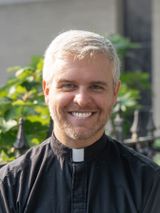

The 16th Sunday after Pentecost, Year A
Sermon for September 13, 2026
My friends, I speak to you today in the name of one God: Father, Son, and Holy Spirit. Amen. Please be seated.
Good morning, Church of the Epiphany. Happy first NFL Sunday of the year? No? I know the Lions play at home at 1 pm today, I think the Bears and Packers are both on the road, the Cowboys and the Giants play in New York tonight at 8… but for most of you, that’s not on your radar. That’s okay.
Probably for most of you, this last week has not been about football at all; instead, the biggest cultural touchstone of this last week was not on Sunday night in New York, but on Friday morning there. Friday, of course, was the twenty-fifth anniversary of the terrorist attacks at the World Trade Center, at the Pentagon, and in Shanksville, Pennsylvania. Four flights were hijacked and crashed on the morning of September 11, 2001, and I think it’s fair to say that morning was the most world-altering morning during my lifetime, though January 6, 2021 may be right there alongside it. I pray nothing ever tops 9/11 for us. Much has never been the same since.
At Gather & Grow a few weeks ago, Shelley Coulter shared that C.S. Lewis, our author for the month of September, died on the same day that JFK was killed, November 22, 1963. That led to storytelling around the table about where everyone was when they heard the President was assassinated in Dallas. My generation has 9/11 as our version of that collective moment. I was at my locker between first- and second-hour classes during my senior year of high school in suburban St. Louis. Chris Foltz told me a plane had hit a skyscraper; I brushed him off, assuming it was an accident. We then watched coverage of the attacks on classroom TVs for the rest of the day; all classwork was canceled, until the principal canceled school completely and sent us home early.
I’m guessing each of you can remember where you were that morning; some of you probably have more personal connections to those events than I do. 9/11 is etched in our personal and collective memory, and each year we hear two words, “Never Forget.” On our better days, that brief slogan means we should not forget the 2,977 innocent people who died that morning in those attacks. Their lives, cut tragically short, ended far too soon. I want to pause to remember those victims this morning, along with all those lost in violent conflict and in war.
Thank you.
Our lectionary text today, always set for the Sunday closest to September 14th in Year A, I think it feels frighteningly appropriate, every three years, for the Sunday that’s closest to 9/11. We likely know the popular saying “Forgive and Forget;” yet we have in hand the slogan “Never Forget” when it comes to our country’s most memorable collective tragedy, as if we could forget it. Then this morning, we hear the words from Jesus, “Forgive your brother, your sister, from your heart.” “How many times?” Peter asks. “Not just seven times, but seventy-seven times.” Jesus answers. Keep on forgiving, forgive beyond measure, there is no limit to forgiveness. In another place, Jesus says to turn the other cheek, to hand over our coat, to walk an extra mile. Can we really do that?
This text, especially this parable, is a difficult one, again. We’ve had some difficult ones lately. We can read this, as some traditions do, as God playing the part of the angry lord, who hands the wicked slave off to be tortured, some argue for eternity. We have a story here with forgiveness, the initial forgiveness of the lord for his slave’s debts, but when the slave refuses to show that same forgiveness to his fellow debtor, he is punished for it. The lesson is seemingly: forgive others, and if you don’t, you’re in trouble with God, who will hand you over to be tortured for not following his example. Be good… or else.
This, of course, if you know me or my understanding of our tradition, is not how I would interpret this text. I don’t think ours is a God of torture, nor of eternal punishment, but one of endless and abundant love, of grace and mercy. So, this can be confusing; it is a text that, if you read God out of it, just taking it on its surface, can sound fair. A man who had been forgiven his debt threw his friend into prison for his debts; the lord was right to punish him for that. We often call this “justice.” It is just, we believe, for people to get what they deserve, either positively or negatively: we should get what we earn, whether in pay or in penalty. And those from less privileged situations than ours especially long for a God of this kind of justice, one who will punish those, even eternally, for their wrongdoing, especially for the pain they have caused their fellow man. We cannot imagine a God who will equally “reward” the murderer and the saint; we do not want to imagine a God who will put Hitler and Stalin alongside Mother Teresa or Saint Peter or grandma someday. There must be punishment. It feels wrong to forgive too much, right?
I will not claim this morning to fully understand how God will handle the lives of those who have done egregious wrong on earth. I don’t think that’s my job; you might, but I don’t. Theologians for centuries have debated this passage and others. They debate what happens after we die, they debate the role of God as judge, of Jesus as our intercessor. They debate whether the doors of hell are locked from the inside, or if hell is completely empty, or if the path to eternal life is indeed narrow, and few will find it… perhaps hell is full. That’s not what I’m here to explain with certainty for you today. My apologies.
Instead, I simply want to urge you to truly forgive, as I believe Jesus urges you, urges all of us, to forgive, seventy-seven times if necessary. Forgive “too much.” Forgive endlessly. This story, in Matthew’s framing, is admittedly an extreme one, with the lord handing a slave over for torture. Some commentators call it one of Jesus’s “nightmare parables,” one with an extreme consequence, almost like Scrooge in Charles Dickens’ Christmas Carol, seeing something horrific in the night so he can avoid it in his real life. We read of the unforgiving servant being tortured for failing to show the grace and mercy of his own lord, that he has benefited from himself. We are being urged not to make that same mistake, we are being strongly urged to forgive from our heart, and maybe we will.
The people of Israel, Jesus’s audience here, were a people of laws, divine laws; they followed them because this is what God instructed, from the time of Moses and the Ten Commandments, going back even before that. Genesis 4 tells the story of Cain and Abel, the sons of Adam and Eve, do we know this one? Cain kills his brother in jealousy and is banished. But in his exile, God protects him and says, according to Jewish tradition, “anyone who kills Cain will suffer vengeance seven times over.” One of Cain’s descendants later says, “I have killed a man for wounding me, if Cain is avenged seven times, then Lamech seventy-seven times.” There is a cycle of vengeance, of violence, in their texts, in their tradition, in their understanding of a law-bound and law-binding God.
But Jesus comes to give us a way out of that cycle that we could not imagine on our own. Jesus comes, echoing this seven-fold vengeance, the seventy-seven-fold vengeance of Genesis 4, and instead preaches seven-fold forgiveness, not just seven times, but seventy-seven times, forgiving more than we can count, instituting a new cycle of grace and mercy and love. Forgive. Stop worrying about enforcing just-sounding laws, about doling out punishment for those who break them. Establish boundaries when necessary, of course; distance can be part of forgiveness. But it is only through forgiveness that we can break cycles of violence, because violence begets violence begets violence, every time. When we don’t forgive, we curse ourselves to those cycles.
When we don’t forgive, we imprison ourselves in our own torture chamber; God does not have to hand us over to anything. We hold on to hate, to grievance, to frustration, to anger, we keep our own ledger of rights and wrongs, and we are imprisoned by it, it eats us alive and often ends in more wrongdoing, in the cycles continuing again and again. We must learn to let it all go.
I will not preach, this morning, about how our government’s response to 9/11 continued the cycles of violence, of vengeance, nor about how the hijackers’ violent and tragic attacks were another instance of doing the same. I am not a politician with answers for a nation-state. But I will say, as your priest this morning, that we have the answer to breaking our own cycles of violence today. We have Jesus, and we have his teachings, as difficult as they may be.
May we all forgive, too much, never forgetting our pain or what we may have lost, but choosing to move forward in grace and mercy instead of imprisoning ourselves and all others, instead of violence leading to violence, wrong leading to wrong.
May we see the forgiveness God has shown us, and may we likewise show it to all, letting our grievances go, leaving justice to God’s infinite wisdom, living here and now in abundant love, for our sake and for their sake and for our world’s.
Amen.