Our Stories Can Cure Our Conflicts
We would be healthier if we could see the other as equally beloved children of God, not as those to be defeated, but as fellow sheep in one flock.
The 15th Sunday after Pentecost, Year A
Sermon for September 6, 2026
My friends, I speak to you today in the name of one God: Father, Son, and Holy Spirit. Amen. Please be seated.
Good morning, Church of the Epiphany. Happy Labor Day weekend, happy return to college football season (for those who celebrate). We had Big Ten football on the TV at our house sort of as background noise yesterday for what feels like the true beginning of fall, but I missed the second half of last night’s game between Michigan and Western Michigan. Did anyone watch it? Anything interesting happen? I’m kidding, I saw when I woke up that the Wolverines squeaked out a win on a second last-second Hail Mary play.
For those not into college football, that probably feels meaningless to you. That’s okay, you are forgiven. (Ha.) Sports, though, this morning, and in general, they give us a way, a chance to talk about belonging and about conflict, in a way that feels safer than most other options. It’s not always entirely safe if you’re talking about “Beating Ohio,” as a current Senate candidate has done, but Abbey and I have made the Buckeye-Wolverine rivalry work in our house. Cubs-Cardinals, Spartans-Wolverines, Lakers-Celtics, Lions-Bears, Duke vs. North Carolina… all of these rivalries, these conflicts can pit neighbor against neighbor, family member against family member, when it comes to a simple game played on a field or a court. One of my favorite Bible commentators pointed out this week that “we set down the full nuance of who we are in order to join our respective (sporting) tribe.” We identify with a color, an animal mascot, to be part of something bigger, to feel some sense of connection, maybe sometimes even to say who we are not.
For most of you here, healthfully I think, sports communities are not your primary place of identification or connection. Your university or your high school, Rotary or Kiwanis, your political party, your hometown, or your family name may be your first group of identity. For some, it’s here at Epiphany, or even the Episcopal Church, as Episcopalians. Take a second and think about this, really, there are no wrong answers. Where do you find your main connections, your primary identity? And is there a sense of conflict there, of some being in and being out of that group? Do you identify partly by who you are not?
In our lectionary texts today, we have a few different passages that touch on identity and on conflict. The first, our Old Testament reading, talks about a festival still celebrated thousands of years later, of God telling Moses and Aaron in Egypt how to prepare a lamb down to the gruesome details, with blood over their doorways: the first Passover meal. “This shall be a day of remembrance… throughout your generations you shall observe it as a perpetual ordinance.” In our second reading, from Romans, we have Paul echoing the commands given to the Israelites in Egypt, connecting the Ten Commandments to Jesus’s command to “love your neighbor as yourself,” binding the people of Israel together with the people of this first-century church, positioning them as a community of love. These texts make it clear what it is to be Jewish, and then what it is to be Christian: “Love does no wrong to a neighbor; therefore, love is the fulfilling of the law.”
It’s our gospel reading this morning that makes our life a little more difficult, at least at first glance. Another Bible commentator I read this week said that this is her least favorite passage to preach on in the entirety of our three-year lectionary cycle, the worst. I won’t go that far, but I do agree that it is too easy to read these six selected verses and come away with a negative view of church, to read it as a place you can be excluded from. We also know that Jesus didn’t talk much about “the church,” outside of this and the bit about Peter from two weeks ago, so these are likely Matthew’s personal applications of Jesus’s teachings, specifically for a post-resurrection community that was experiencing conflict. And perhaps most troubling for us when we read this on a Sunday morning is that our lectionary assemblers left out some really important context; these verses come directly after one of everyone’s favorite parables, the Parable of the Lost Sheep. In the verses immediately prior to this passage, Jesus says that a shepherd should leave the ninety-nine on the mountainside to go search for even one lost sheep that has gone astray. “It is not the will of your Father in heaven that one of these little ones should be lost.” We know, or we need to learn and remember, that ours is not a God of exclusion or punishment, but of going to radical lengths to bring even one, single, lonely lost sheep back into the flock.
So, with that as context, we are given this morning six verses about conflict resolution, conflict in a community of Jesus followers, conflict resolution that ends with “whenever even two or three of you are together, I am there with you.” We should recognize a few things about this text, this particular instruction of Jesus according to Matthew. First, Jesus says that when there is a conflict, it should be dealt with privately if at all possible. We know this, in this community where “Fierce Conversations” has been preached and practiced for years, that when we have issue with each other, when we ourselves are sinned against, not some general sin but a personal one, we know that confronting it is better than letting it fester, than letting it spread to others or to the rest of our community. We may not all be good at this, it is difficult to actually do, but it is clearly best practice: do not gossip, do not triangulate… take care of your conflicts, take care of each other.
We also see what was framed on Wednesday morning, by Jim Wright I believe, as we read this together, we see a good legal sort of framework for if that first encounter does not resolve the problem. Get some witnesses together quietly to help settle your conflict; if the same issue keeps arising, bring in some trusted members of the community both as witnesses and as advisers. And then last, yes, after bringing it to the wider church, if the conflict still doesnt resolve, then for the sake of everyone, sometimes we will need to say, “we are no longer in community together.” For us this morning, this is probably easiest to understand in the case of someone breaking the law; we know we need safe churches, especially for our most vulnerable. But even if a law is not broken, communities need to feel safe. And yet even still, this is framed here after so many qualifying statements and steps, as a last resort: not vindictive, but boundary-setting. Thankfully, when we read this in context with the Parable of the Lost Sheep, we know what happens next. God never stops pursuing them, God never stops pursuing us. Any estrangement is never final.
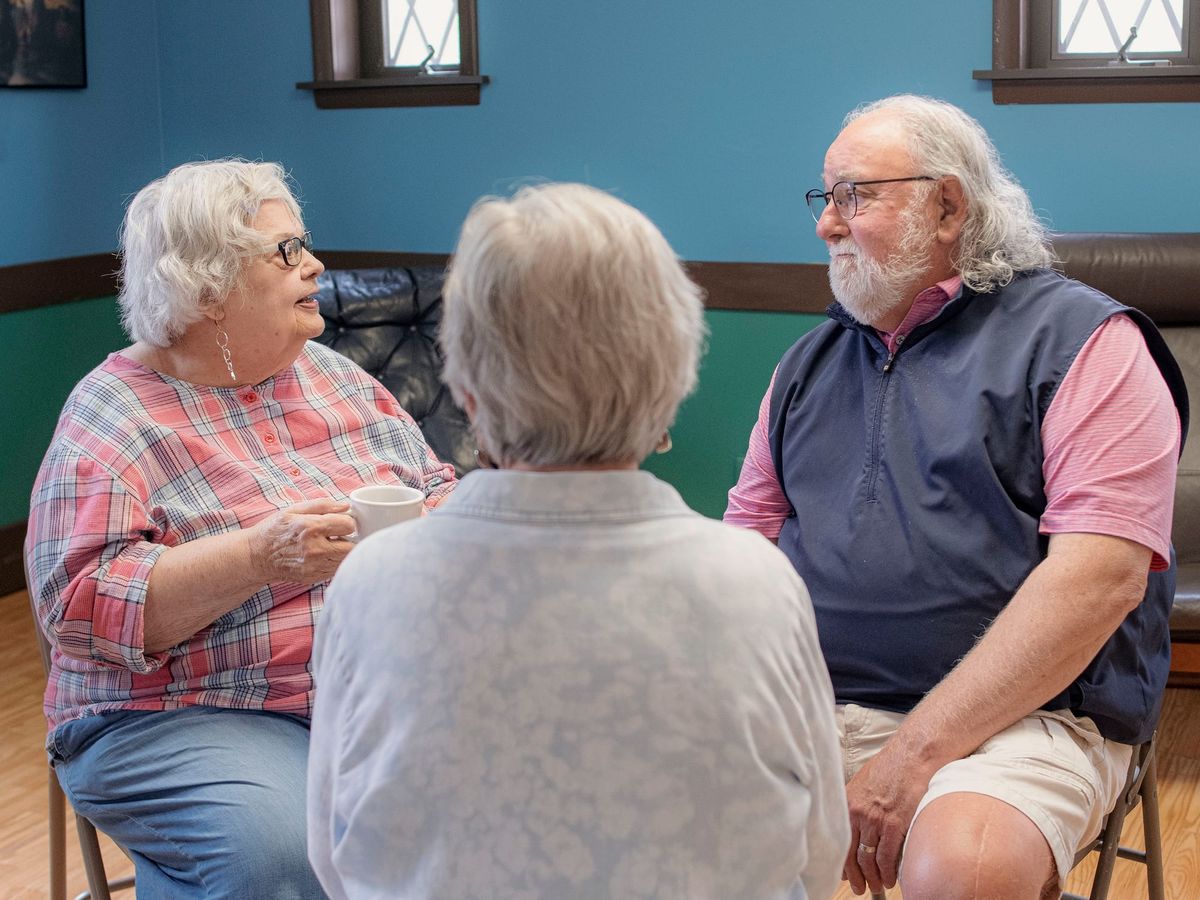
Now, this can be a tough lectionary text to read on its own to be sure, but I see important application for our lives today in its first and last verses: if there is conflict among you, go and talk about it together… and, wherever two or three are gathered in Jesus’s name, he will be there with them. It seems to me that God promises to be present when we take time to be together, to share our stories with each other, when we do not defend ourselves or only think of how we may have been wronged, when we do not simply wait for our own turn to talk, to state our own case, but when we listen, when we consider the other’s point of view, and then truly engage, all from a foundation of love. Martin Buber called this the “I-Thou” encounter, not seeing each other as objects but as subjects, on equal footing with one another in genuine interaction. The church, our families, our incredibly polarized political world, they would all be so much healthier if we would see the other as equally beloved children of God, not as those seeking to harm us, not as competitors, not as adversaries, not as those to be defeated in battle, but as fellow sheep in one flock.
Sports, again, give us a safe, almost silly, place to consider this. If the Spartan, the Bronco, and the Wolverine would recognize that they are all from the most beautiful state in the country, maybe they could enjoy games sitting together? If the Cubs fan and the Cardinals fan both told their stories about how they fell in love with baseball, wouldn’t they have enough in common to be friends instead of mortal enemies? How about this: what if the Republican and the Democrat, both Americans wanting what’s best for their families, for their country, what if they’re just listening to different voices and are being led in different directions, but they really have a lot in common, their conflict is not that deep, maybe they just need to share and truly hear each other’s stories? Is there hope for them? (Did I just take us too far? No.) See, the only way we can see through any conflict, through pain, through our own suffering, the only way we can find our identity together, the only way we can be in a healthy society, in a community, esp. in a church, is by truly connecting with each other, with the humble telling of our stories, with God in our midst.
I’m going to end today a bit differently, with a prayer from Irish poet Padraig O’Tauma:
Where there is separation
there is pain.
And where there is pain
there is story.
And where there is story
there is understanding
and misunderstanding
listening
and not listening.
May we — separated peoples, estranged strangers,
unfriended families, divided communities —
turn toward each other,
and turn toward our stories,
with understanding
and listening,
with argument and acceptance,
with challenge, change
and consolation.
Because if God is to be found,
God will be found
in the space
between.
May we take time to hear each other’s stories, friends, all our stories. And, may they cure our conflicts. Amen.