Scatter Some Seeds, See What Grows
We do not know what impact a little seed may have, so we are called to recklessly scatter seeds of love everywhere, all over the place, all the time.
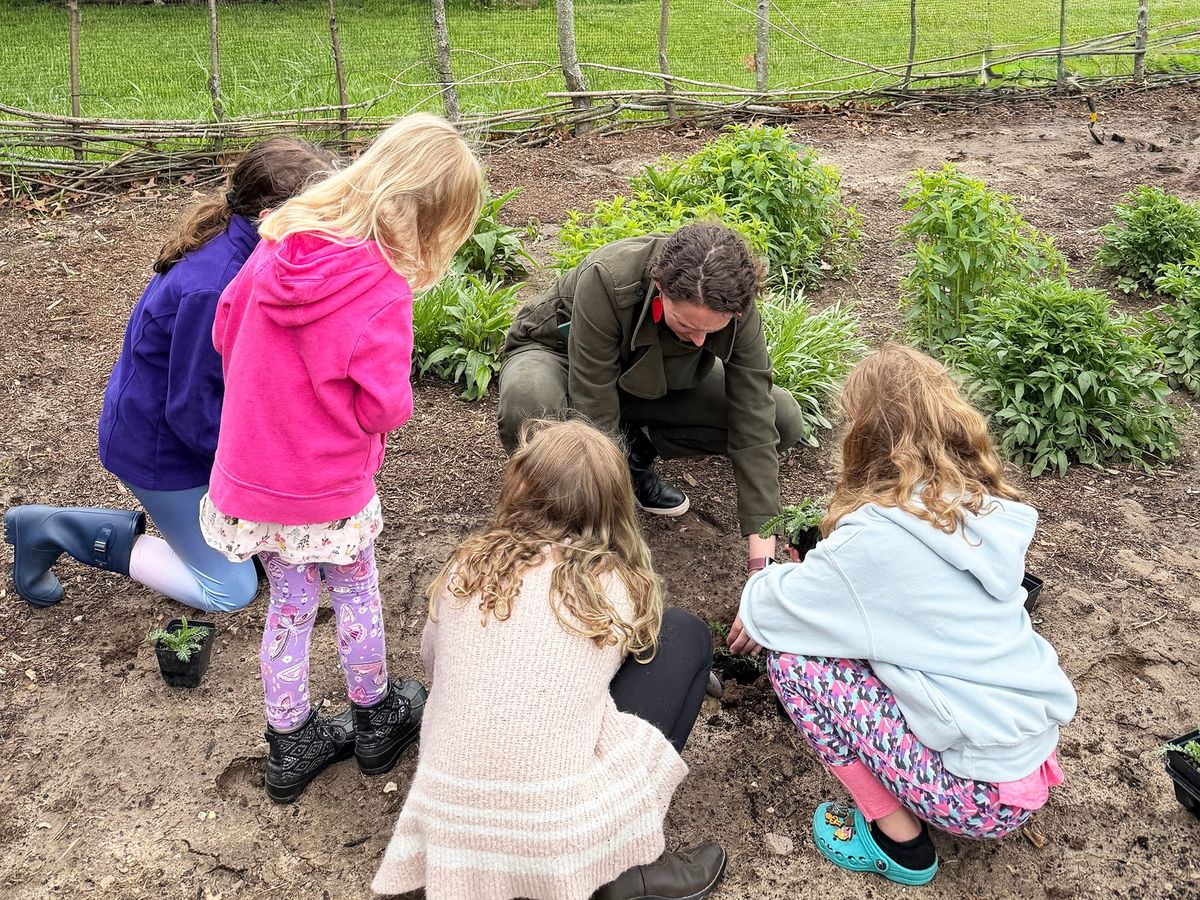
The Seventh Sunday after Pentecost, Year A
Sermon for July 12, 2026
My friends, I speak to you today in the name of one God: Father, Son, and Holy Spirit. Amen. Please be seated.
Good morning, Church of the Epiphany. It’s good to be back with you again this Sunday. Our family took a quick three-day trip up to Mackinac Island and Tahquamenon Falls this week; I have zero good and helpful sermon illustrations from our time away. Ha. I doubt I performed any acts of ministry, other than trying to be a good dad and husband. Thank you for granting us (and respecting!) our brief time away, in between summer Sundays.
Thankfully for your recently-vacationing priest, this week’s lectionary gospel text does not provide this Sunday morning’s preachers with an especially difficult challenge; it is deeply preachable, all on its own. In the gospel of Matthew, we are presented today with the divinely-named “Parable of the Sower,” one of the most familiar of Jesus’s many parables. Jesus, perhaps hoping for a minute of vacationing rest, “went out of the house and sat beside the sea.” Sounds nice, right? But then, of course, the crowds gathered around him, and so he escapes to a boat to teach them while they gathered on the shore.
And Jesus gets right to it, so we will today as well: “Listen! A sower went out to sow.” Jesus starts a few of his parables with the phrase, “The Kingdom of Heaven is like...” so I can imagine, if he wasn’t ready for vacation, that this one might begin: “The Kingdom of Heaven is like a sower.” Instead, we get, “Listen!” The sower spreads some seed, some on the path, some on rocky ground, some among the thorns, and some on good soil. I have little experience gardening or planting myself, but on the surface, this feels reckless… why is this person throwing seeds among rocks and thorns? Why not all on the good soil?
We see what happens, of course, to much of this metaphorical sower’s seed. The seed on the path is eaten by birds; the seed on rocky ground springs up and is scorched; the seed among thorns is choked off and cannot flourish. But the seed on the good soil, it grows, it brings forth grain, some a hundredfold, some sixty, some thirty. It grows abundantly.
Jesus then quickly explains his meaning to those gathered on the shore, even naming this teaching the “Parable of the Sower.” The seed is the Word of the Kingdom. The evil one can snatch it away before it can grow in one’s heart; the Word can fail to grow because of a lack of roots, a lack of depth; or the Word can be choked by the cares of the world and the lure of wealth. Goodness, that last one feels applicable for us today, the seed among thorns. But as for seed sown on good soil, the one who hears the Word and understands it… it bears fruit, it changes the life of the hearer, and, we know, it changes the world.
Friends, I could wrap the sermon there? Jesus’s parable stands on its own this morning. It has only been about 5 minutes, and I’ve been on vacation, right? No, I have a little more.
I have heard this parable preached on for decades; for those raised in the church, you’ve probably heard it since before I was born. The imagery of seed being sown in different types of soil still connects, 2,000 years later, even if we can buy seedless watermelon at Barden’s today. I’ve heard this parable preached as our need to cultivate good soil in ourselves, soil that can allow the seed to land, to grow roots, to not be choked, to flourish. This is a good message for us at various points in our lives: what kind of soil are we, this morning? How do we become receptive to the Word of God, to this seed? Barbara Brown Taylor preaches this text from another perspective: “What if we have it all backwards?” What if instead of this being about cultivating good soil in ourselves, it is simply “about the generosity of our maker, the prolific sower who… is willing to keep reaching into his seed bag for all eternity, covering the whole creation with the fertile seed of his truth and love.” That’s good, a message of an extravagant God who will not stop loving everything and everyone. We know God, after all, is love. “If it’s not about love, it’s not about God.”
I’m going to take us in a slightly different direction this morning, not radically different or contradicting, maybe a combination of those two messages, maybe you’ve heard this sort of message before too. What if we ourselves, here this morning, what if we are to be the sowers in this story? Not the seed, not the soil, not just the hearers of the word from an extravagant, loving God, but the ones doing the sowing too. This lines up with the offertory hymn we’ll sing today, so I’m going to read the first two verses of it for us:
“Lord, make us servants of your peace: where there is hate, may we sow love; where there is hurt, may we forgive; where there is strife, may we make one. Where all is doubt, may we sow faith; where all is gloom, may we sow hope; where all is night, may we sow light; where all is tears, may we sow joy.”
There’s an active quality to reading Jesus’s parable in this way. We are not merely the potential recipients of love and truth, we are not merely beneficiaries of God’s extravagant love, though those are both certainly true. Instead, the Kingdom of Heaven is like a sower, and we too are called to be the sowers to bring about the Kingdom of Heaven here on earth today. We are the ones called to be counter-cultural, to love and welcome without exception, to be different from the world around us in a way that changes everything for the better. We are the ones that through our actions and decisions and attitudes can plant a better world, one that can bring forth grain and good fruit and a yield far beyond what we ourselves can imagine. We do not know what impact a little seed may have, and so we are called to recklessly scatter seeds of love everywhere, all over the place, at all times, in all situations. We scatter seeds. This is all that we can do.
And we are called to stop worrying about the outcome of that planting. This is one of the most encouraging parables in the entirety of the gospel if we read it without the fear of being rocky and thorny soil. When read from the perspective of a generous, extravagant sower who just throws seed everywhere, we see that it is not ours to worry about how the seed lands or what may grow from it, but simply to spread it. It is not ours to worry at all, really: “Which of you by worrying can add a single hour to your span of life?” But truly, if this parable tells of a God who scatters the seed of truth and love abundantly, if it’s a parable of our call to spread that seed abundantly too, we must not worry about where that seed lands. We must not worry about how long we have left to spread that seed; we must not worry about if we’re being efficient in its distribution. We must simply scatter the seed far and wide for as long as we have in all our relationships and interactions.
Some of you know the Romero Prayer, offered by a Catholic bishop here in Michigan in the 1970s; I have it printed on the bulletin board near the church office because I need it as a regular reminder. Part of the prayer says this, “It helps, now and then, to step back and take a long view. The Kingdom is not only beyond our efforts, it is even beyond our vision. We accomplish in our lifetime only a tiny fraction of the magnificent enterprise that is God's work… This is what we are about: we plant the seeds that one day will grow… this is a beginning, a step along the way, an opportunity for the Lord's grace to enter and do the rest. We may never see the end results… we are prophets of a future not our own.”
Friends, this morning, I challenge us to consider this Parable of the Sower, preached by Jesus from a boat, all week long and from different angles. I wonder what sort of soil we are, if we are deep enough and receptive enough to let the Word of God germinate, to let the fruits of the spirit grow in us. I wonder too how we would be changed if we realized every day, every morning, that God had infinite, abundant grace and love for all of us, that ours is a God of reckless love. And, I wonder what seeds we ourselves are scattering: if we’re actively sowing love where there is hate, if we’re sowing hope where there is gloom. In this metaphor, it’s important to realize that we are always scattering something; let it be the love of Christ. Because it is not for us to worry about the response of others, it is simply for us to love, no matter the soil, no matter the end results.
We are called to extravagantly scatter the seeds of love; may the world be lucky enough to see what grows when we do.
Amen.